

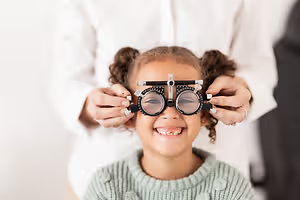
Back-to-school season often means more reading, more homework, more classroom technology, and more time on laptops, tablets, and phones. While screens are now part of everyday learning, long periods of close-up work can make children’s eyes feel tired, dry, strained, or unfocused.
Modern screens do not usually damage the eyes in the way many parents worry about. The bigger concern is how screen habits affect comfort, focusing, blinking, posture, sleep, and whether they reveal an undiagnosed vision problem.
At Modern Eyes Optometry in Carlsbad, California, children’s vision concerns can be evaluated with a comprehensive eye exam, and families can receive guidance on glasses, lens options, screen comfort, and myopia management when needed.
Why Back-to-School Screen Time Can Be Hard on Children’s Eyes
Screens require children to focus up close for long periods. During the school year, that near work may increase quickly as children move between digital assignments, reading, classroom screens, homework, and recreational device use.
When children concentrate on screens, they often blink less often. This can lead to dryness, irritation, and blurry vision. They may also hold devices too close, lean forward, or forget to take breaks, which can make eye strain and headaches worse.
Common signs of screen-related vision discomfort include:
- Headaches after homework or device use
- Blurry vision after screen time
- Tired, sore, or dry eyes
- Eye rubbing
- Squinting
- Difficulty shifting focus from near to far
- Holding tablets, phones, or books close
- Avoiding reading or homework
- Trouble concentrating during close-up tasks
These symptoms may improve with better screen habits, but frequent discomfort should be checked by an eye doctor.
Screen Habits Can Reveal a Vision Problem
A child who sits close to a screen or holds a device near their face is not necessarily damaging their eyes. More often, this behavior is a clue.
Children are practical. If a tablet, book, or screen looks clearer up close, they may move closer without realizing it is unusual. If the classroom board, road signs, or faraway objects look blurry, your child may not know how to explain the problem.
This can happen with myopia, also called nearsightedness. A child with myopia may see well up close but struggle with distance vision. The start of a new school year can make myopia symptoms more obvious, especially when children need to see the board, classroom displays, sports fields, and screens at different distances.
Why Myopia Matters During the School Years
Myopia is more than a need for stronger glasses. In children, nearsightedness can progress as the eyes grow. If your child’s prescription keeps getting stronger, it may be time to ask about myopia management.
Myopia management is designed to help slow how quickly nearsightedness progresses. Depending on your child’s needs, your optometrist may discuss options such as specialty contact lenses, myopia-control lenses, orthokeratology, or other treatment recommendations.
A comprehensive exam can help determine whether your child is a candidate for myopia management and which option may be appropriate.
Glasses and Lens Options for Screen Comfort
If your child needs glasses, the prescription is only one part of the conversation. Lens options can also affect comfort during school, screen use, and daily activities.
Anti-reflective coatings can help reduce distracting reflections from screens, classroom lighting, and headlights. Blue-light-filtering lenses may also be discussed for children who spend extended time on digital devices, especially when evening screen use affects comfort or sleep routines.
Children’s eyewear should also fit well, feel comfortable, and hold up to everyday school life. A well-fitting pair of glasses can help your child feel more confident and make it easier for them to wear their prescription consistently.
These lens options do not replace healthy screen habits, but they can be part of a more comfortable school-year vision plan when recommended for your child.
When Eye Strain May Need a More Personalized Solution
Some children and teens experience screen-related headaches or visual fatigue because their eyes are working harder than they should to focus or coordinate. In some cases, symptoms may be related to prescription changes, eye teaming, dry eye, or subtle alignment issues.
If your child has frequent headaches, eye strain, or trouble focusing during reading and screen work, an eye exam can help identify whether a standard prescription, specialized lens recommendation, myopia management plan, or other care may be helpful.
Healthy Screen Habits for Back-to-School
Healthy habits can make screen use easier on your child’s eyes. Encourage your child to:
- Follow the 20-20-20 rule
- Keep screens at a comfortable distance
- Take breaks during homework and gaming
- Blink often during screen use
- Use good lighting while reading or studying
- Reduce glare from windows and lamps
- Avoid screens right before bedtime
- Spend time outdoors when possible
- Wear prescribed glasses as directed
The 20-20-20 rule is simple: every 20 minutes, look at something about 20 feet away for at least 20 seconds. This gives the focusing system a short break and helps reduce eye fatigue.
Schedule a Back-to-School Eye Exam
If your child is rubbing their eyes, squinting, sitting close to screens, complaining of headaches, or struggling with reading and homework, it may be time for a comprehensive eye exam.
At Modern Eyes Optometry in Carlsbad, California, your child’s vision, eye health, focusing ability, prescription, and screen comfort can be evaluated before the school year gets busier.
https://scheduleyourexam.com/v3/index.php/5175 to help your child start the school year with clearer, more comfortable vision.
Back to School FAQs
Can screen time damage my child’s eyes permanently?
Modern screens do not usually cause permanent eye damage, but long periods of screen use can contribute to temporary eye strain, headaches, dryness, and blurry vision.
Why does my child hold screens so close?
Your child may hold screens close because they see better up close than far away. This can be a sign of myopia or another vision concern that should be checked during an eye exam.
Can glasses help with screen-related eye strain?
Yes. If your child has an uncorrected prescription, the right glasses can reduce unnecessary strain. Lens options such as anti-reflective coatings may also help reduce distracting glare.
What is myopia management?
Myopia management is care designed to help slow the progression of nearsightedness in children. Options may include specialty lenses, eye drops, or other recommendations based on your child’s exam.
Is a school vision screening enough?
No. School screenings can miss focusing problems, eye teaming issues, myopia progression, and other vision concerns. A comprehensive eye exam gives a more complete picture.